World War II Rationing
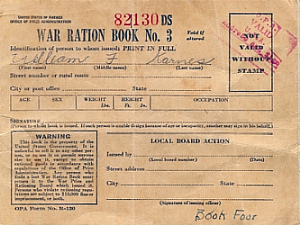
This is a WWII ration stamp book that belonged to my grandfather, William Foster Karnes, SR. During WW II, our government rationed selected items for two reasons. First, there was a need to ensure that military forces had adequate supplies. Secondly, we were unable to obtain some goods from countries that had been invaded by foreign governments. To enforce rationing, the government issued ration books. Every man, woman and child was issued a ration book restricting consumption of essential products.
The Office of Price Administration would announce what products were being rationed during a given time, which stamps could be used to buy those products and what amount of the product could be sold. This office also posted the maximum price for a product, which retailers were required to display. Example: Each stamp number in a book represented a specific product. To purchase that product, say a pound of chicken, you must have a number 4 stamp in your book. At the time of purchase, you tore off the stamp and gave it to the store. If you had used all your "chicken" stamps, you would be unable to purchase chicken until a new book was issued to you. Each book was issued for a given period of time, and you couldn't get another book until that time had passed. Stamps could also "expire" if you did not use them during the allocated time.
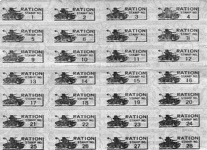
Page of stamps
from a ration book
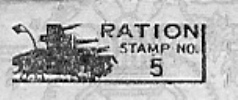
Close up of a ration stamp.
The first commodity to be rationed was rubber as the Japanese invasion of the Dutch Indies cut off our supply. Gasoline rationing also reduced the number of miles the average citizen drove and thus also conserved rubber. By December of 1942, those who used their cars for "nonessential" purposes were restricted to three gallons of gas a week. Many families planted "Victory Gardens" to supplement their grocery list. By the end of the war, rationing limited almost every product with the exception of eggs and dairy goods.
INSTRUCTIONS OF THE BACK OF THE STAMP BOOK
1 This book is valuable. Do not lose it.
2 Each stamp authorizes you to purchase ration goods in the quantities designated by the Office of Price Administration. Without the stamps you will be unable to purchase those goods.
3 Detailed instructions concerning the use of the book and the stamps will be issued. Watch for those instructions so that you will know how to use your book and stamps. Your Local War Price and Rationing Board can give you full information.
4 Do not throw this book way when all of you stamps have been used, or when the time for their use has expired. You may be required to present this book when you apply for subsequent books
Rationing is a vital part of your country's war effort. Any attempt to violate the rules is an effort to deny someone his share and will create hardship and help the enemy.
This book is your Governments' assurance of your right to buy your fair share of certain goods made scarce by war. Price ceilings have been established for your protection. Dealers must post these prices conspicuously. Don't pay more.
Give your whole support to rationing and thereby conserve our vital goods. Be guided by the rule:
"If you don't need it, DON'T BUY IT."
